Study finds Filipinos more concerned about raising children than birth rates
When Filipinos talk about birth rates online, the conversation often shifts from population figures to a more personal concern: whether they can afford to raise a family. A year-long study by Capstone Intel Corp.…
By Capstone-Intel Research TeamAugust 11, 20263 min read
When Filipinos talk about birth rates online, the conversation often shifts from population figures to a more personal concern: whether they can afford to raise a family.
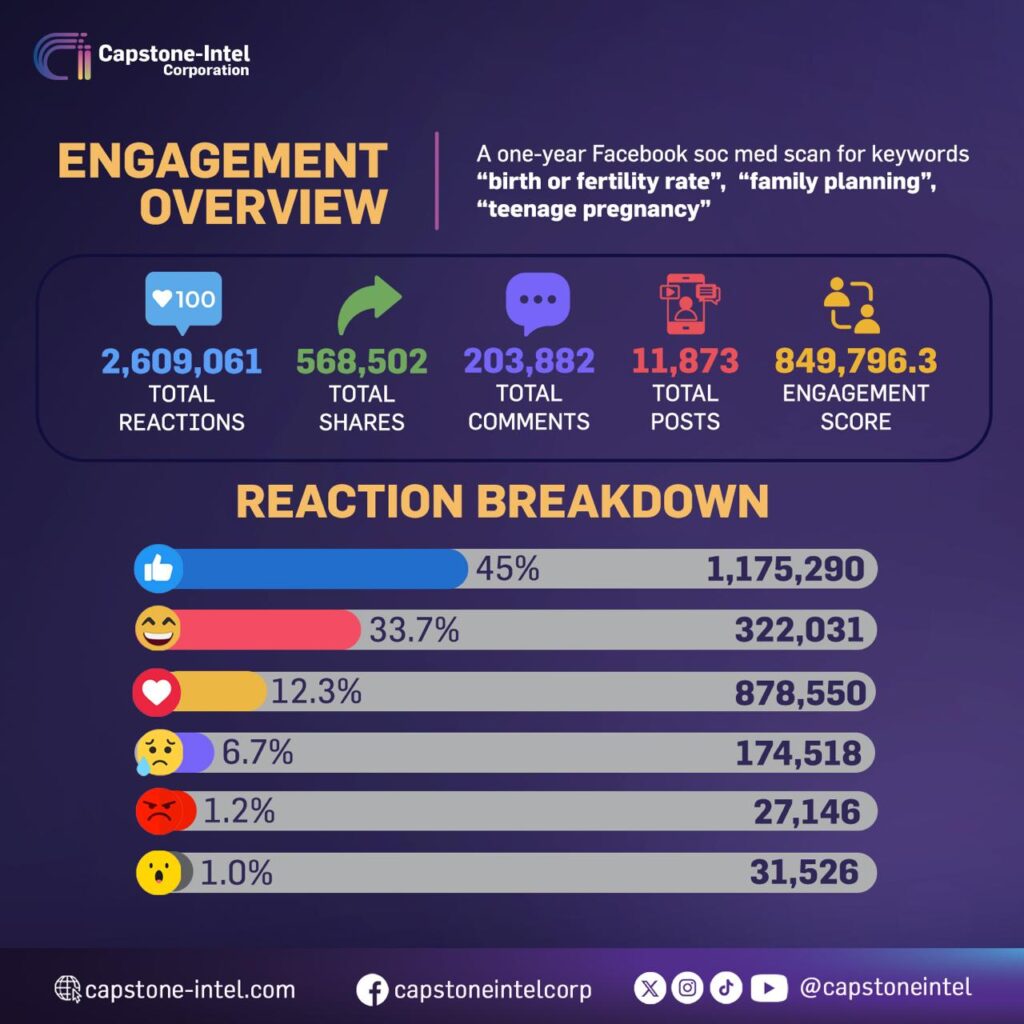
A year-long study by Capstone Intel Corp. found that Facebook users were more engaged with stories about the cost of raising children, family planning and teenage pregnancy than with reports on whether the country’s birth rate is rising or falling. The study analyzed 11,873 public Facebook posts published between June 26, 2025 and June 26, 2026 using keywords related to birth rates, fertility, family planning and teenage pregnancy.
The findings were reflected in the study’s five most engaging Facebook posts. The highest-ranked came from Radar.ph, which reported that more Filipinos are choosing to have fewer children, or no children at all. It logged an engagement score of 35,328.9, the highest among all posts included in the study.
An ABS-CBN post on family planning ranked second with an engagement score of 26,973.1, followed by a Klasik Titos and Titas of Manila post about millennials’ “teenage pregnancy trauma,” which garnered 15,601.9.
Completing the top five were a GMA News report on teenage pregnancy and sexual abuse with 7,475.1, and an ABS-CBN News report on the decline in teenage pregnancies among those aged 15 to 19 in 2025 with 7,403.5.
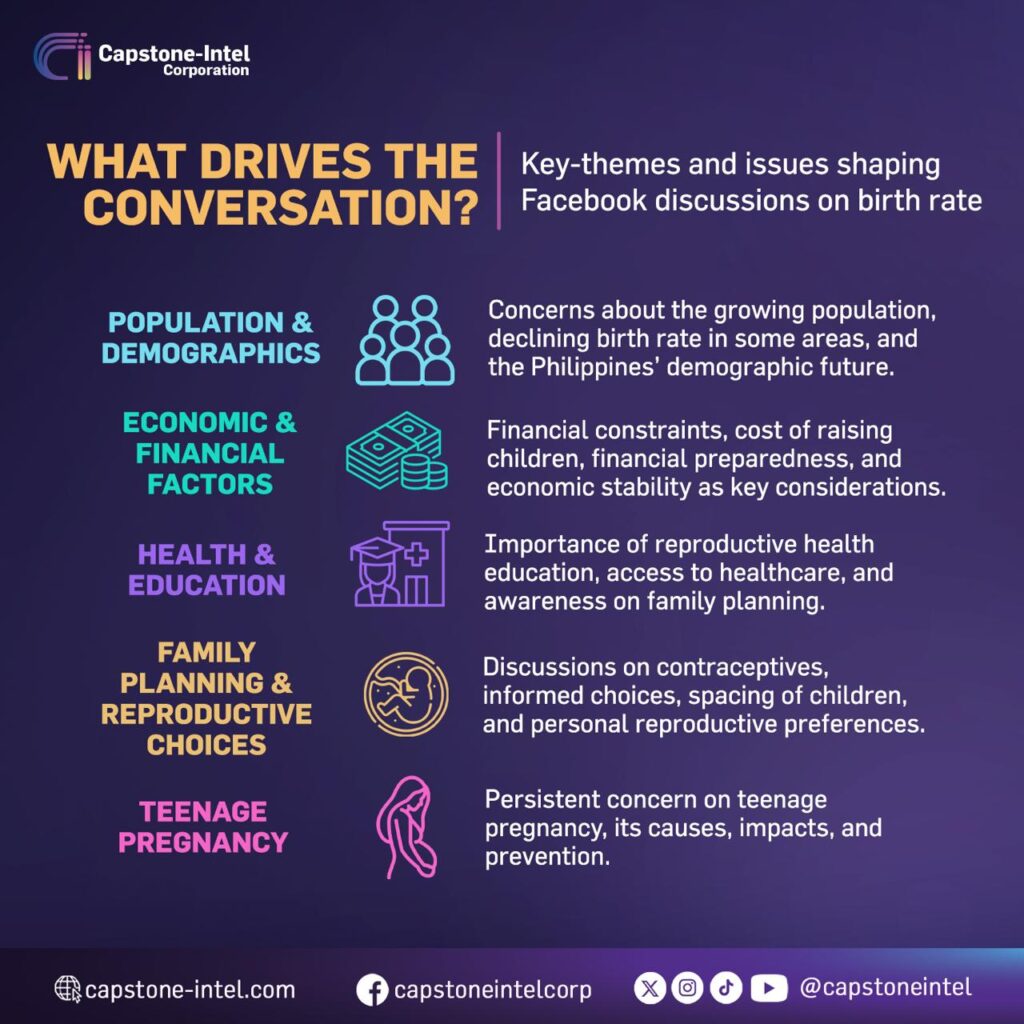
According to the study, the posts that attracted the most attention were those that reflected people’s day-to-day concerns. Discussions about family planning, reproductive health and the financial challenges of raising children consistently generated more engagement than posts focused mainly on fertility statistics.
The analysis also showed that discussions rarely stayed focused on birth rates alone. Of the 11,873 posts reviewed, 6,219 (52.4%) were directly related to birth rates, while 5,654 (47.6%) veered into broader discussions on family planning, teenage pregnancy and the cost of raising a family.
The study said the findings are based only on public Facebook posts identified through specific keywords and do not represent the views of all Filipinos. Even so, researchers said the discussions provide a glimpse into what resonates with social media users when it comes to family planning, parenthood and the cost of raising children.
Capstone-Intel Research and Publications Director Kaye Domingo said the findings suggest that online conversations have moved beyond birth-rate figures and are increasingly centered on the realities of parenthood.
For many Filipinos, she said, the question is no longer simply whether they want to have children, but whether they have the financial means, information and support needed to raise a family.
This findings aligns with an earlier Capstone-Intel study on Teenage pregnancy, examining the roles of sex education, cultural norms, and access to contraception. The study surveyed 1,210 respondents from September 20–27, 2023, with a ±3% margin of error at a 95% confidence level.
The Research Team at Capstone-Intel Corporation delivers data-driven insights on public sentiment, emerging trends, and societal issues to help organizations and communities make informed decisions.